
About the Author: Ashley Thomson

Professional Journey
Ashley started in business improvement in 1998, working for an Australian consulting company. He honed his skills by optimising corporate giants like Coles Group, Myer, ANZ Bank, Telstra, and Zurich Insurance. This hands-on experience gave him practical insights into the workings of great businesses and the pitfalls of poor performers.
Accolades and Awards
Ashley’s exceptional coaching prowess has earned him a place in the prestigious Coaching Hall of Fame (2019). Additionally, his achievements have been acknowledged through multiple awards, solidifying his reputation as a world-class business coach. He leads a team of award-winning business coaches at Tenfold, setting the gold standard in the industry.
Expertise Across Industries
With diverse experience spanning FMCG, manufacturing, wholesale, distribution, construction, trades, retail, and professional services, Ashley has successfully coached businesses across various sectors. His expertise lies in coaching mature businesses with revenues ranging from $5M to $50M, guiding them through complex financial structures, marketing strategies, operational improvements, and leadership development.
Innovative Problem Solver
Ashley’s background as a convergence task force manager and project manager at leading organisations like Show Ads and NewsCorp – PMP Print equipped him with the skills to streamline complex business functions. His ability to sift through data, identify key business drivers, and provide agile financial models enables businesses to thrive in competitive markets.
Published Author and Global Authority
Ashley’s influence extends far beyond his coaching practice. He co-authored “The Quiet Sales Genius,” a definitive guide to effective sales strategies. He has been featured in prominent publications, podcasts, and conferences, cementing his status as a thought leader in the coaching community.
Ashley’s influence reaches across the globe, with features and accolades from esteemed platforms such as:
Cash Flow Under Pressure: Why Australian SME Owners Need to Get Ahead of Late Payments
As of April 2026, Australian business conditions are still tight, and the Reserve Bank of Australia cash rate target is 4.10%. Higher rates and cautious spending amplify one simple truth I see every week: late payments turn into an expensive form of financing that your business did not agree to provide.The fact is cash flow timing, not just profitability, determines whether you can meet payroll, pay suppliers, and keep service quality high. The implication for service-based SMEs employing staff is brutal: one slow-paying client can force you to choose between paying wages on time and investing in delivery capacity.In this ...
Late Payments Are Strangling Australian SMEs: How Business Owners Can Take Back Control of Cash Flow
Late payments strangle otherwise profitable Australian SMEs because they force you to fund your customers’ business with your working capital. If your debtor control is weak, you end up making reactive decisions: delaying ATO payments, cutting wages/contractors late, skipping maintenance, and saying “yes” to the wrong work just to keep cash moving. The fix is tighter payment design, faster invoicing, and a disciplined collections system you run every week. Why do late payments hit profitable SMEs so hard? Late payments hurt profitable SMEs because profit is an accounting outcome, while cash is a timing outcome and payroll, suppliers, rent, ...
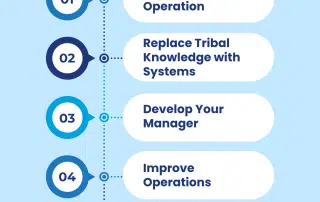
Bought a Business, Bought the Problems: How to Renovate the Fixer-upper You Took Over
When you buy an established business, you rarely inherit a clean slate. More often, you inherit a fixer-upper. You get the staff, the clients, the equipment and the revenue. You also get the outdated systems, the patchy reporting, the tribal knowledge and the habits that made the previous owner want to sell in the first place. I see this every week with new owners in manufacturing, fabrication, trades, distribution and plant hire. They buy a business that looks solid from the outside, only to discover that the inside needs serious renovation. This article is written for owners who have found ...
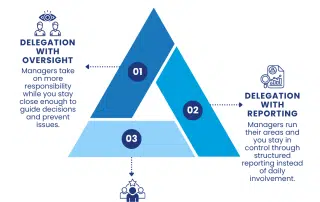
Bought a Business for Freedom, But You’re Working Harder: How to Get Control and Step Out of Day-to-day
When owners come to me after buying a business, the story is usually the same. They expected more freedom, more structure and a team that could run the day-to-day. Instead, they find themselves working harder than ever. The business they bought looked established, but once they stepped in, they discovered weak systems, patchy reporting and a lot of tribal knowledge. If that is your situation, you are not alone. Many owners who have bought a business with staff and systems already in place quickly realise that the operation relies heavily on habit rather than structure. I coach owners through this ...
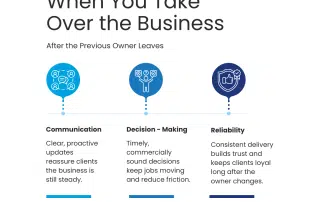
After the Previous Owner Leaves: How to Keep Clients When You Take Over the Business
Taking over an established business is a major investment, especially when you inherit a team, long-standing clients, and systems held together by habit rather than structure. This is common in the types of acquisitions I see owners make. Architectural aluminium manufacturers, sheet metal fabricators, powder coating workshops, mechanical repair businesses, height safety fabricators, wholesalers, distributors, and plant and equipment hire firms often have strong technical capability but inconsistent processes and extensive tribal knowledge. When the previous owner steps away, the business enters a vulnerable period. Clients start watching closely. Staff feel unsettled. Competitors look for openings. This is where strong ...
Protected: Tenfold Client Briefing: Petrol Prices, Recession Prediction and Actions to Take Now
This content is password-protected. To view it, please enter the password below. Password:
Rising Fuel Costs: How to Tighten Operations in Your Trades Business to Protect Margins
In the third part of our action plan for managing rising fuel costs, I'm turning the focus on internal operations with practical advice for how to handle price rises to protect your margins. As a business coach for trades, I know that every function of operations is under pressure right now. And the Australian Institute of Petroleum’s weekly petrol and diesel reports, and the broader inflation context reflected by the ABS explanation of fuel in the CPI all point to the same commercial reality: fuel prices are likely to stay high for a while. Businesses that rely on vehicles, site ...
Rising Fuel Costs: How to Manage Supplier Price Increases AND Good Relationships in Your Trades Business
In the second part of our action plan for managing rising fuel costs, I'm going to give practical advice for how to tackle price rises from your suppliers. The war in the Middle East is creating surge pricing at the bowsers but escalating fuel costs are affecting more than your own vehicles. They are also shaping how suppliers deliver, price, batch orders, recover freight, and respond to urgent requests. The ACCC’s current monitoring of fuel prices and the Australian Institute of Petroleum’s weekly reports make it clear that fuel prices AND availability remains volatile. For a trades business, that means ...
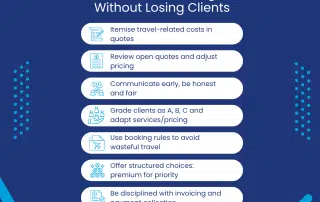
Rising Fuel Costs: How to Protect Margins Without Damaging Client Relationships in Your Trades Business
As of March 2026, Australian trades businesses are dealing with a real fuel-cost problem, not a temporary inconvenience. The ACCC’s current fuel monitoring updates show recent price rises have varied sharply across cities, and the Australian Institute of Petroleum’s weekly pricing reports continue to show elevated petrol and diesel prices nationally. If you run service vehicles, quote jobs across metro areas, or rely on regular site visits, fuel does not sit neatly in one overhead line. It leaks into call-outs, travel time, delivery charges, quoting behaviour, scheduling, and customer expectations. Having coached businesses through other crises - the GFC ...
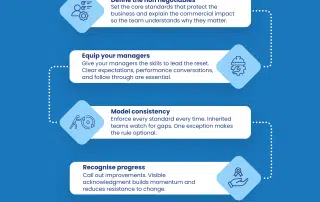
We Bought the Business and Inherited the Team: How to Reset Standards in an SME Without Losing Good People
When owners come to me after buying a business, the same challenge comes up repeatedly. They have inherited a team that has operated a certain way for years, and now they need to improve performance without losing the people who keep the wheels turning. Improving team performance after acquisition is one of the most common coaching conversations I have with owners in trades, construction, and manufacturing. The opportunity is real, but so is the risk. Resetting standards in an SME is a delicate balance of commercial discipline, operational clarity, and people leadership. I coach owners through this transition because the ...
